Batman ’66 Still Works: Why the Brightest Dark Knight Endures
A Saturday Morning Cereal podcast preview.

Same Bat-blog, same Bat-channel. Saturday Morning Cereal is heading back to Gotham, 1966-style, and we are doing it with the biggest possible POW and BAM on the marquee.
Before superhero television got dark, gritty, and allergic to color, Batman exploded into living rooms like a neon comic panel come to life. The ABC series ran from January 12, 1966, through March 14, 1968, and starred Adam West as Batman and Burt Ward as Robin, two heroes who never once blinked at the absurdity around them. The show’s tone lived somewhere between sincere crime-fighting and punchline delivery, and it worked because it never apologized for what it was.
Batman ’66 still works because it is not trying to be cool. It is trying to be clear. It is trying to be heroic. It is trying to be fun. In a world where modern superhero stories often confuse darkness with depth, this version of Batman endures because it dares to be bright and sincere. The series treats heroism like something you practice on purpose, not something you stumble into by accident.
This was not just a show. It was a vibe. It was pop-art action and cliffhanger chaos, with a narrator practically daring you to come back tomorrow for the next installment. It was the kind of television that could make you believe the fate of Gotham depended on a labeled gadget pulled from a utility belt at exactly the right moment. If you grew up with it, you remember the rhythm in your bones. Same Bat-time. Same Bat-channel.
The Batman TV series succeeded because it committed to the spectacle, committed to the bit, and committed to the idea that heroism could wear bright colors and still be heroic. Every episode delivered morality plays with simple stakes and loud lessons. The early seasons leaned into two-part storytelling, complete with serial-style cliffhangers designed to keep viewers hooked. It punctuated action with comic book sound effects like POW and BIF, as if the television itself were reading the panels out loud. It also gave us an arsenal of unforgettable gadgets, including the legendary Shark Repellant Bat-Spray.
It is comfort food television, and the recipe still works because it is made with real ingredients. The humor is not lazy. The style is not accidental. Most importantly, Adam West plays Batman with total conviction, which gives the show its strange and lasting power. The comedy lands because the hero does not smirk at it. Batman is not in on the joke. He believes in the mission, and so do we.
One thing I cannot stop noticing on this rewatch is just how bright Gotham is. Not bright in a metaphorical way, either. I mean visually, literally bright. The city is drenched in light. The sets are bold and clean. The colors pop like a comic book page left out in the sun. The villains are wrapped in pop-art flair, their costumes and props practically screaming for attention, as if every scheme needed to be announced with a flourish.
Even Batman’s suit has a kind of flamboyant confidence to it. In some lighting, it is so saturated it almost reads purple. That alone makes it feel like an artifact from a different cultural moment, one where superheroics could be stylized, theatrical, and unafraid of being seen. It is not realism. It is not concealment. It is presentation.
A lot of what we have come to think of as “default Batman” was shaped by the darker turn in the late twentieth century, when pop culture leaned hard into noir, grit, and psychological weight. We have had decades of Batman stories built on shadows and trauma, on cities that feel like open wounds, on heroes who look like they are carrying the entire world’s misery in their cape. Many of those interpretations are brilliant. Some are definitive. They are also so dominant now that it becomes easy to forget Batman can mean something else.
Batman ’66 is not a misunderstanding of Batman. It is a different answer to the same question.
What if the world is dangerous, but goodness still looks good?
Batman ’66 suggests that heroism can be bright, even when the stakes are real. It treats morality as something you can state out loud without irony. It treats decency as strength. It treats class, calm, and clear-eyed conviction as virtues worth admiring. In that world, the future feels optimistic, not because the show is naive, but because it dares to imagine leaders who behave with moral clarity and basic decency.
That is why it still works. It is not bright because it is childish. It is bright because it is confident.
And maybe that is why it hits even harder now.
We live in a moment where everything feels a little more drab, a little more tense, and a little more cynical. Dark times always show up in style and design. They show up in muted palettes, harsh lighting, and stories that feel resigned to the worst in people. Batman ’66 reflects something else entirely. It reflects a world where justice can be pursued without losing your soul, where the hero does not need to be broken to be believable, and where hope is allowed to be part of the aesthetic.
Every other Batman we have seen on television or film is defined, in some way, by grit. Batman ’66 is defined by clarity. It stands apart because it is not ashamed of being heroic. It is not afraid of color. It is not embarrassed by goodness.
And honestly, do we miss it a little bit?
The brightness. The hope. The idea that doing the right thing is not only possible, but admirable. The idea that a hero can be a gentleman. Batman ’66 is not just a different tone. It is a different kind of promise.
In a real world that is turning darker, I am grateful we have this era. I am grateful that Gotham was once a place where the lights stayed on.
Catwoman was never a side character in this world. She was a full-on event. The series gave us multiple iconic takes on Selina Kyle, and one of the most memorable belonged to Lee Meriwether, who brought her own sleek, sharp, mischievous energy to the role.
This is where our upcoming Saturday Morning Cereal episode gets extra special. We captured exclusive audio with Catwoman herself, Lee Meriwether. That is not a rerun, and it is not a quote pulled from an old clip. It is Saturday Morning Cereal doing what we do best, getting close enough to a legend to hear the story in her own voice.
We are also bringing you the one and only Burt Ward, the Boy Wonder himself. If you grew up on “Holy ____ , Batman,” this is the sound of your origin story being narrated directly into your ears. Ward was always the heartbeat of the show’s energy, delivering pure optimism with a side of panic and exclamation points. Now we have exclusive audio with him as well, and it is exactly the kind of moment that reminds you how rare and meaningful these conversations can be.
Batman ’66 had another secret weapon, and it was its guest cast. The show did not just feature memorable guest villains. It recruited legendary performers to bring them to life. West and Ward anchored the series with unwavering sincerity, but Gotham’s rogues’ gallery routinely stole the spotlight with theatrical charisma that felt delightfully oversized and perfectly calibrated for the tone.
The list reads like a pop culture hall of fame. Cesar Romero’s Joker was grinning chaos made flesh. Frank Gorshin’s Riddler brought electric intensity to every question mark he touched. Burgess Meredith’s Penguin turned criminal plotting into a series of glorious tantrums. The series even introduced original creations like Egghead, played with delicious “eggacting” flair by Vincent Price, proving that Batman ’66 did not just adapt comic book madness. It invented new kinds of it.
In this universe, the villains were never background noise. They were headline attractions. The show understood that if Batman and Robin were going to be icons, their enemies had to be equally memorable.
And just when you think the series cannot get any more charming, it delivers one of the most beloved running gags in television history: the Bat-climb window cameos. Whenever Batman and Robin were scaling a building, a window would suddenly open, and out would lean a celebrity who acted like seeing two caped crusaders outside your apartment was completely normal. It was the show’s way of winking at the audience and saying, with total confidence, that yes, this is ridiculous, and yes, that is the point.
The cameo roster is famously stacked. Jerry Lewis appears. Dick Clark pops up. Sammy Davis Jr. shows up. There is even a moment when The Green Hornet and Kato lean out during the climb, with Van Williams and Bruce Lee bringing extra cool to the joke without breaking the spell of the series.
Those window moments were quick, silly, and totally unnecessary, which is exactly why they were perfect. Gotham did not just have crime. It had celebrity neighbors with excellent timing.
All of that is exactly why our upcoming Saturday Morning Cereal episode is not just a recap. It is a celebration. Batman ’66 was not merely a superhero series. It was a pop culture event that pulled in icons and entertainers who wanted to be part of the fun, even if only for a moment.
We are honoring that spirit in the biggest way we can, and we are not doing it alone.
Enter our in-house Batman ’66 expert, Jimmy “The Gent” Leszczynski of The Retro Cool Nerd.
Every Dynamic Duo needs an Alfred, and Jimmy is exactly that. He is the one who shows up with deep cuts, episode receipts, and the kind of “Actually, sir…” knowledge that makes you sit up straighter. He is not just a fan. He is a true believer, a dedicated Batman ’66 cosplayer, and a pop culture historian who knows the difference between remembering something fondly and understanding why it worked in the first place.
Jimmy brings the details you only get from years of living with the show. He understands the specific rhythm of its dialogue and the way it balances sincerity and satire without collapsing into parody. He can tell you why a particular villain performance still lands, why the humor remains timeless, and how the series managed to be ridiculous and heroic at the exact same time. And wait, how many different actors played The Riddler?
This is Jimmy’s time. This is his moment to step into the Bat-Signal spotlight.
In our upcoming episode, we are celebrating Batman ’66 the way it deserves to be celebrated. Not as a novelty, and not as a punchline, but as a classic. This is the show that proved superhero stories could be joyful, colorful, and wildly creative. You can expect a love letter to its pop-art genius, behind-the-scenes flavor, and fandom-level appreciation, along with exclusive audio featuring Lee Meriwether and Burt Ward, plus Jimmy The Gent delivering the kind of Gotham lore you only get from someone who has made this universe part of his DNA.
Batman ’66 endures because it is unapologetically itself. It is bright without being shallow, silly without being careless, and heroic without needing permission. The Dark Knight does not have to be gloomy to be great. Sometimes, the brightest version is the one that lasts.
Same Bat-podcast, same Bat-channel.
Stay crunchy.
Update:
Dr. Travis Langley Joins Our Batman ’66 Episode
1/16/2026
We have one more major update for our upcoming Saturday Morning Cereal celebration of Batman ’66, and it is the kind of news that makes the Bat-Signal feel a little brighter.
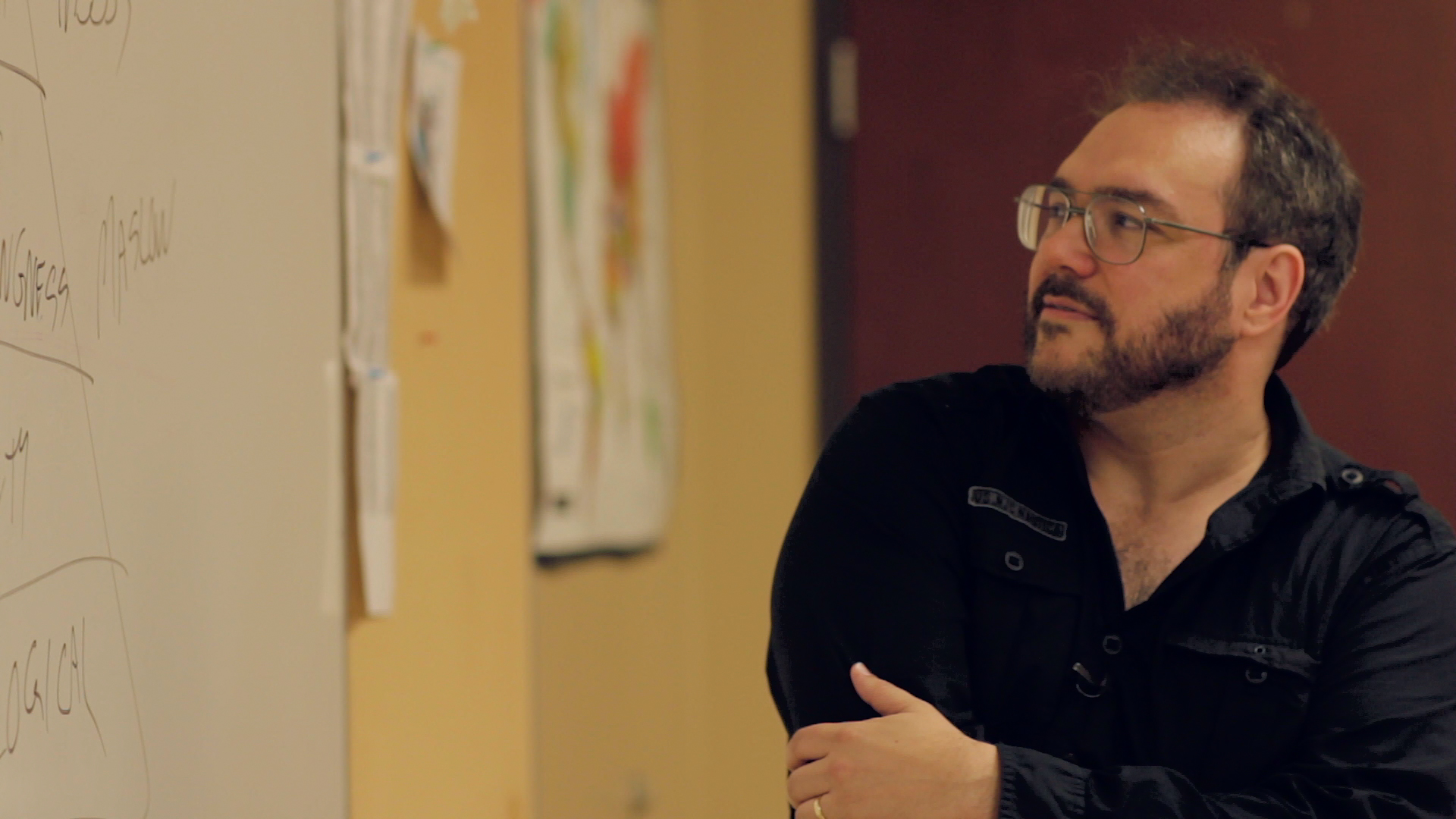
Dr. Travis Langley has agreed to join our Batman ’66 episode as a guest.
If you have ever wanted someone to put real language to why this colorful, sincere, pop-art version of Gotham still works, Dr. Langley is the perfect voice to bring into the conversation. He is a psychologist and the author of Batman and Psychology: A Dark and Stormy Knight, a widely loved breakdown of what makes Batman, his world, and his cast of characters tick.
His work explores the emotional engines behind the mythology, the reasons Batman endures across eras, and how each version of Gotham reflects the values and anxieties of the time. That idea matters here, because Batman ’66 is not simply “camp.” It is a vision of heroism built on clarity, decency, and an almost stubborn belief that doing the right thing is worth doing out loud.
In our episode, Dr. Langley will help us dig into the psychology of Batman ’66 and its characters, including why this era feels so refreshing when so much modern storytelling is steeped in grit. We will talk about what the show communicates through its brightness, its moral certainty, and its confident sincerity, and why that tone still resonates so strongly today.
This is also what makes our guest list feel so special. Alongside Dr. Langley’s insight, we have exclusive audio with Lee Meriwether and Burt Ward, and our in-house Batman ’66 expert, Jimmy “The Gent” Leszczynski of The Retro Cool Nerd, ready with the deep cuts and the episode receipts. Dr. Langley gives us the psychology. Jimmy gives us the lore. Catwoman and Robin give us the history. Batman ’66 gives us the hope.
Same Bat-time. Same Bat-channel. Now with a doctorate.